
Chinese New Year Holiday Notice
February 3, 2026The Ultimate Guide to Glamping Tent Materials: Durability, Aesthetics, and ROI
Premium Glamping Tent Materials Introduction
What Materials are Glamping Tents Made Of?
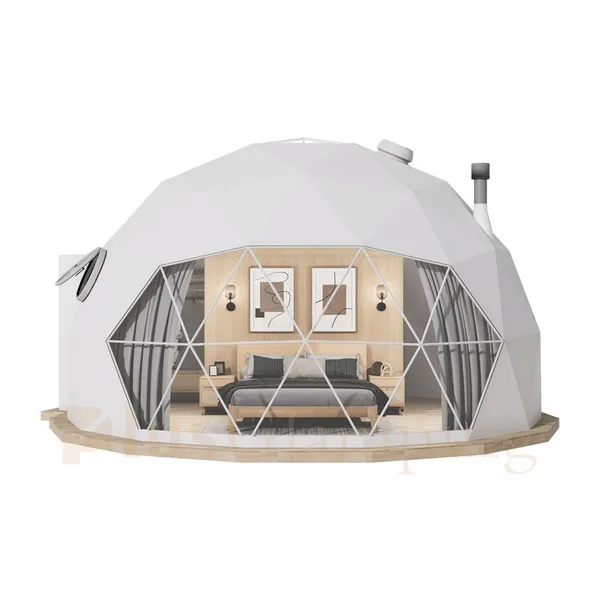
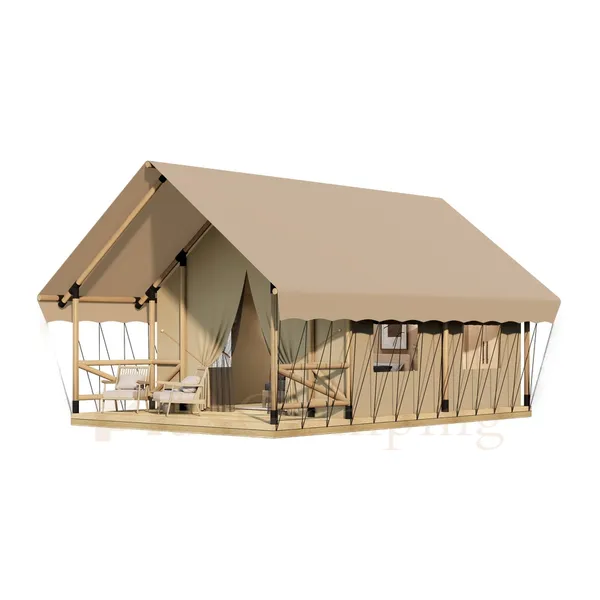
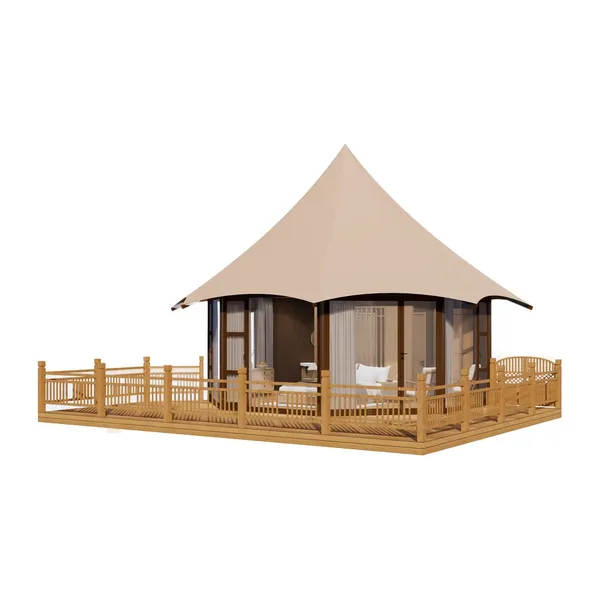
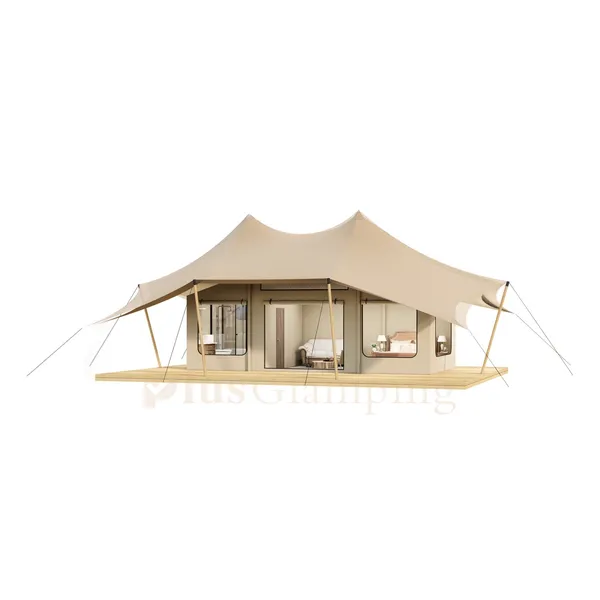
Stretch Tent
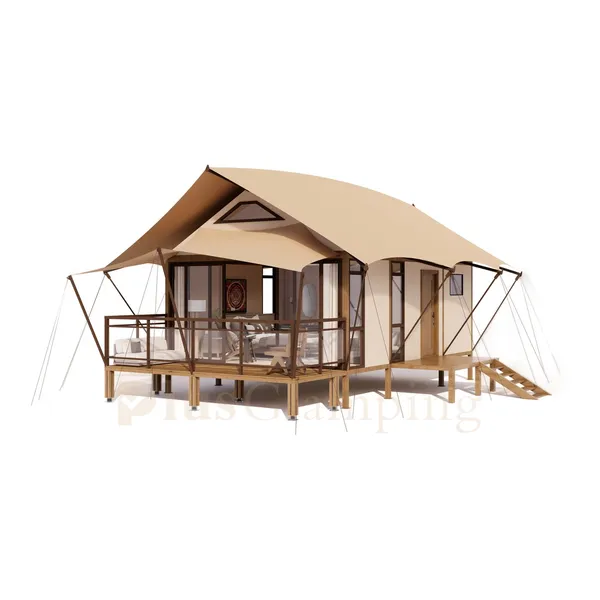
The Sculptural & Modern Escape
550g High-Elasticity & Tear-resistant Mesh-reinforced PVC + 550g Heavy-duty Ripstop Canvas Outer Cover(Roof)
420g High Performance Canvas Inner & Walls
 Structural Frame
- Preservative-treated Solid Pine Wood
- Anti-corrosion Coated Steel(Optional)
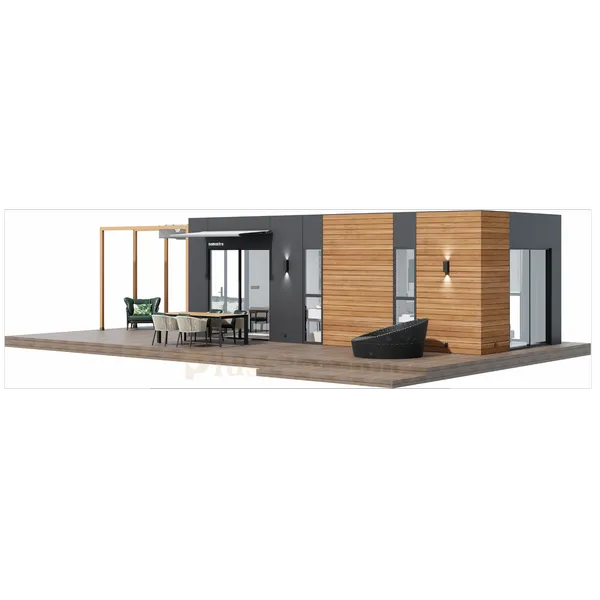
Glamping Tent Performance Comparison
| Structure Type | Outer Cover | Inner/Wall | Frame Strength | Floor System | Waterproof | Sun Protection | Insulation | Sturdiness |
|---|---|---|---|---|---|---|---|---|
| Glamping Dome | Excellent | Excellent | Very Good | Good | Excellent | Excellent | Excellent | Good |
| Safari Tent | Very Good | Very Good | Very Good | Good | Good | Good | Good | Very Good |
| Stretch Tent | Excellent | Very Good | Very Good | Good | Excellent | Very Good | Very Good | Very Good |
| Tent House | Excellent | Excellent | Excellent | Good | Excellent | Excellent | Excellent | Excellent |
| Luxury Lodge Tent | Excellent | Excellent | Excellent | Good | Excellent | Excellent | Excellent | Superior |
| Prefab Aluminum House | Superior | Superior | Superior | Good | Superior | Superior | Superior | Superior |
Note: Data based on standard configurations. Performance may vary based on customization and site conditions.
Glamping Tent Materials Key Categories
Structural Framework Materials: Steel, Aluminum, or Wood?
If the enclosure is the skin, the structural framework is the 'skeleton' that defines a glamping tent's resilience and longevity. A high-performance frame must withstand intense wind loads and environmental stressors without compromising the structure's elegance. While galvanized steel offers cost-effective industrial strength, alloy aluminum has emerged as the premium choice for its superior strength-to-weight ratio and maintenance-free life. For projects prioritizing organic aesthetics, preservative-treated wood remains a classic, blending the structure seamlessly into its natural surroundings.
Galvanized/Coated Steel
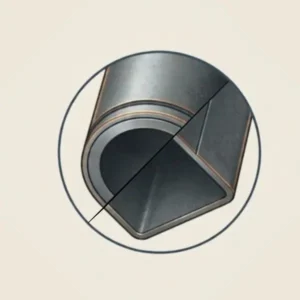

Strength: Highest structural strength
Weight: Heavy
Waterproof: Excellent
Anti-Corrosion: Good to Excellent
Initial Cost: Economical (Low entry price)
ROI: Standard. Lower initial cost but requires maintenance. Used For: Glamping Dome(D Series), Luxury Lodge Tent, , Tent House, (Optional for Safari Tent and Stretch Tent)
- **The industry standard.
Best for all-around durability and performance in high wind/snow load regions. Lifespan of up to 15+ years.
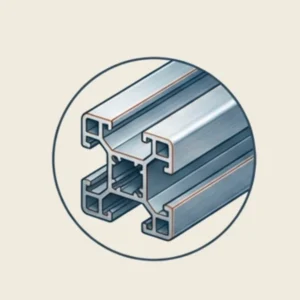
Aluminum Alloy
-
Strength: High (Optimal for modular units) -
Weight: Lightweight (Low logistics cost) -
Waterproof: Excellent -
Anti-Corrosion: Superior (Rust-proof) -
Initial Cost: Premium (High upfront cost) -
ROI: Highest. Maintenance-free, 30yr+ life, high scrap value. - Used For: Prefab Aluminum House, Glamping Dome(DX Series)
- Niche use for coastal/humid environments where corrosion is the primary concern, or for remote sites where low weight reduces transportation and installation costs.
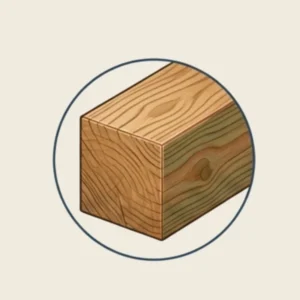
Treated Wood
-
Strength: Moderate -
Weight: Moderate -
Waterproof: Fair -
Anti-Corrosion: Moderate (Needs treatment) -
Initial Cost: Moderate -
ROI: Lower. High maintenance and shorter lifespan. - Used For: Safari Tent, Stretch Tent
- Primarily for projects where a specific natural aesthetic is the primary goal, but be prepared for a significantly higher maintenance burden.
Enclosure Materials: Fabrics, Membranes, and Panels
Regardless of the material you choose, all premium glamping enclosures meet these four essential standards to ensure guest safety and comfort: Waterproofing, Flame Retardancy, UV Protection, and Mildew Resistance. A well-designed tent is a synergy of layers: A heavy-duty roof for protection, a breathable inner tent for comfort, and insulated wall panels for year-round livability.
PVC Coated Polyester Fabric
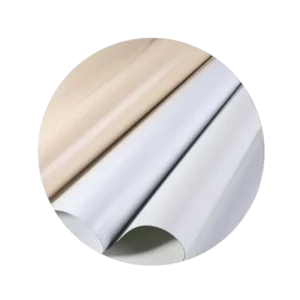
- 850g-950g/m2, 550g/m2(Stretch Version)
- Fire Retardant & 100% Waterproof.
- Highly cost-effective with proven industrial durability.
- Specialized Stretch Version (550g): Specifically engineered for Stretch Tent Roofs due to its mesh-reinforced elasticity.
- Common Usage: Single-layer Outer Roof. (Safari Tent, PVC Glamping Dome), Second Roof of insulation(Tent House)
- Note: Low breathability; requires active ventilation systems.
PVDF Architectural Membrane
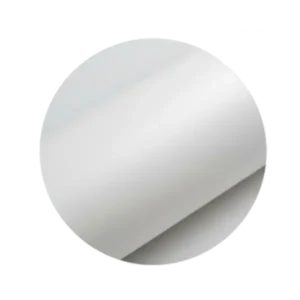
- 1050g/m2
- Fire Retardant & 100% Waterproof.
- Extremely high tensile strength, heavy snow load capacity.
- Superior UV resistance and 15+ year operational lifespan.
- Offers the best "Lotus Effect" self-cleaning.
- Common Usage: The primary Outer Roof for permanent luxury resorts.(Luxury Lodge Tent, Tent House)
T/C Canvas & Polycotton
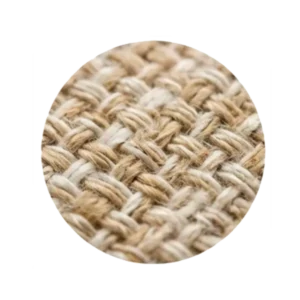
- 420g-550g/m2
- Naturally Breathable: Regulates interior humidity and prevents condensation.
- Fibers swell to seal gaps. Reduces condensation. Best for arid climates.
- Best for creating a cozy, authentic safari-style atmosphere.
- Common Usage: The Inner Tent (Inner liner) or breathable Side Walls.(Safari Tent, Stretch Tent, Tent House)
Hard Shell Panels
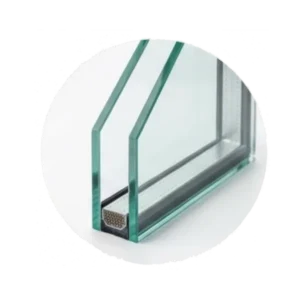
- Tempered Glass: Used for Panoramic Window Walls or curtain wall systems.
- Alloy Composite Aluminum Panels (Prefab Houses): A multi-layer "sandwich" structure offering superior thermal insulation and structural rigidity with zero maintenance and extreme weather resistance.
- Composite Wall System with Canvas (Tent Houses): A high-performance hybrid wall. It combines a solid, insulated inner core with a 420g high-quality canvas exterior. This provides the "cozy" look of a tent with the thermal efficiency and soundproofing of a solid building.
- Performance: Both systems offer professional-grade fireproofing (B1), waterproof sealing, and significantly higher energy efficiency than single-layer fabrics. -30dB Noise Reduction & High Impact Resistance.
- Common Usage: Structural Wall Panels (replacing soft fabric sides). Offers house-like security and superior thermal/acoustic insulation.
Insulation Layer Materials: Thermal Comfort for All Seasons
While the outer membrane protects against rain and wind, the insulation layer defines the interior climate. For a professional glamping site, insulation is the difference between a "summer-only" rental and a lucrative, year-round business.
Level 1: Radiant Barriers
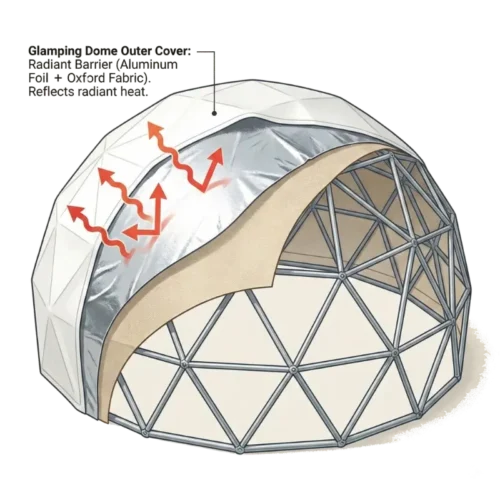
- Materials: Multi-layer Aluminum Foil Laminated with Oxford Fabric.
- How it works: Reflects up to 85% of radiant heat away from the tent.
- Best for: Temperate climates and summer heat protection. (R-Value: ~2-3).
- Common Usage: Glamping Dome
Level 2: Hygroscopic Buffers
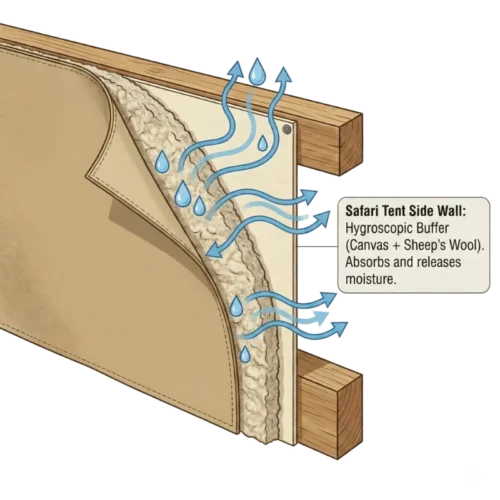
- Materials: Natural Sheep’s Wool or Compressed Canvas Layers.
- How it works: Naturally absorbs up to 33% of its weight in moisture without feeling damp.
- Best for: High-humidity areas or eco-conscious resorts. It naturally regulates humidity and prevents the "stuffy" tent feeling.
- Common Usage: Safari Tent
Level 3: The 'Arctic' Solution
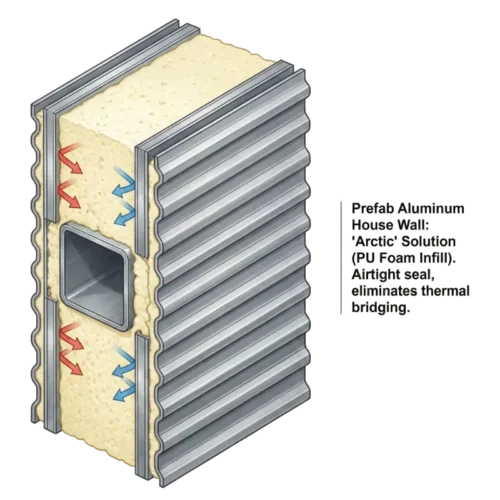
- Materials: Polyurethane (PU) Foam or High-Density Phenolic Infill.
- How it works: Creates an airtight seal and eliminates "thermal bridging" (heat loss through structural joints).
- Best for: Extreme cold environments (temps < -10°C). With an R-Value of 6-7 per inch, it’s mandatory for luxury alpine glamping.
- Common Usage: Prefab House
Note:
- R-Value measures a material’s resistance to heat flow. The higher the R-value, the better the insulation.
- It is important to note that if you choose Advanced Hardshell Systems, such as our Alloy Composite Aluminum Panels or Glass Curtain Walls, the insulation is already 'built-in.' These structural panels are engineered with high-density cores that provide superior thermal resistance, eliminating the need for additional fabric-based insulation layers.
Flooring & Foundation Systems: The Anchor of Comfort
A premium flooring system does more than look good; it acts as a structural anchor and a thermal barrier against the cold, damp ground. In professional glamping, we view the floor as a multi-layered system designed for stability, moisture protection, and barefoot comfort.
Flooring & Foundation System 3D Exploded View
- The Consultant's Pick: SPC (Stone Plastic Composite)
100% Waterproof rigid core. Mimics wood grain but carries zero risk of rot or swelling in humid environments. High wear resistance. - Alternative: Engineered Wood Premium hand-feel but high maintenance. Requires sealing against termites.
- Alternative: Coir Matting Rustic and breathable. Best for dry bell tents; difficult to sanitize.
- CRITICAL: Elevated platforms are mandatory to preserve fabric lifespan by ensuring under-floor airflow.
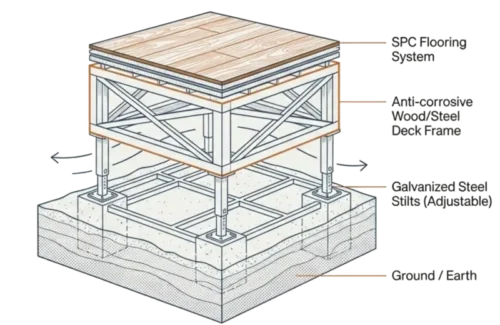
Flooring system
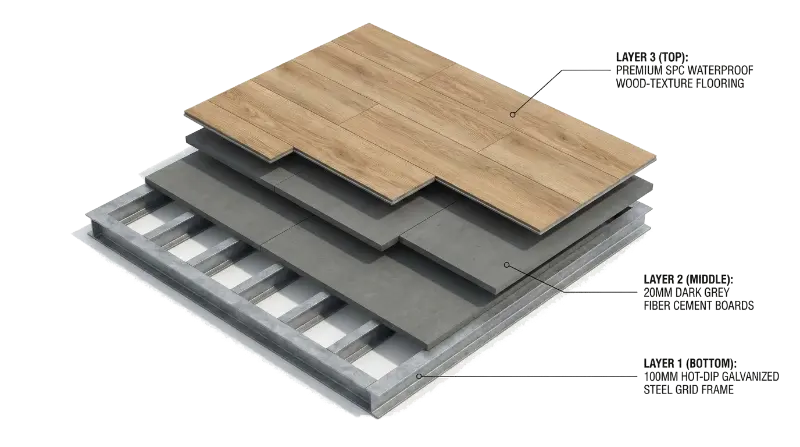
- 1. Structural Base: Hot-Dip Galvanized Steel Frame
- Role: The "chassis" of your unit. It elevates the structure to prevent rot and ensures a perfectly level surface on uneven terrain.
- Benefit: Superior rust protection for 20+ years, providing a rock-solid foundation that won't warp or sag over time.
- 2. Substrate Layer: 20mm Fiber Cement Board
- Role: The heavy-duty flat base that sits between the steel frame and the final floor finish.
- Benefit: Fireproof, waterproof, and termite-proof. Unlike plywood, it provides a silent, "solid-house" feel when walking, with zero squeaking.
- 3. Surface Finish Options (The Touch Point)
- SPC Waterproof Flooring (Standard): Best for high-traffic interiors. It’s scratch-resistant and completely waterproof—ideal for guests coming in from the rain.
- Multi-layer Solid Wood (Premium): Offers the ultimate luxury feel and natural warmth for high-end hotel-style interiors.
- WPC (Wood Plastic Composite) Decking: The professional choice for outdoor terraces and platforms; it withstands sun and rain without needing annual oiling or maintenance.
How to Choose the Right Materials for Your Glamping Site?
Selecting the best materials is not about finding the most expensive option; it’s about matching the engineering to your specific environment. Based on our global project experience, here is our expert recommendation:
The Climate Matrix: Material Selection

For Coastal & Tropical Resorts
- Risk: Rot & Mildew
- Recommendation:
- Alloy Aluminum Framework
- PVC or PVDF covers
- SPC Flooring
- Avoid: Cotton Canvas.
- Why? Aluminum naturally resists salt corrosion, while the PVDF "Lotus Effect" ensures sand and sea salt wash away easily with rain.

For Arid & Desert Climates
- Risk: UV & Heat Accumulation
- Recommendation:
T/C Canvas/Polycotton (Breathable). White Reflective Covers.
Radiant Barrier Insulation
Double-Roof Systems (Air Gap). - Avoid: Dark colored PVC.
- Why? Breathable T/C Canvas is essential for managing desert heat, while Radiant Barriers reflect intense solar radiation.

For Alpine & Snow Regions
- Risk: Snow Load & Heat Loss
- Recommendation:
Prefab Aluminum House with "Arctic Level" Insulation.
Steel Frames (Load bearing). Spray Foam Insulation. Glass Domes (Thermal mass). Stove Jacks. - Avoid: Standard foil liners alone.
- Why? Rigid hardshell panels with built-in insulation cores eliminate thermal bridging, keeping the interior warm even at -20°C.
The Terrain Matrix: Topographical Adaptation
Coastal Zone
- Constraint: Salt Spray Corrosion.
- Solution: Aluminum Alloy, Galvanized steel, and Anti-corrosion coated steel.
Mountain / Open Plains
- Constraint: High Wind Shear.
- Solution: Geodesic Glamping Domes: Spherical aerodynamics allow wind (up to Level 11) to pass around.
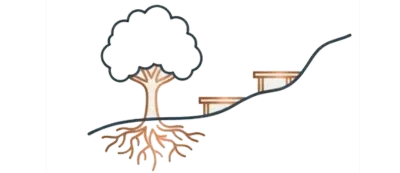
Forest / Uneven Ground
- Constraint: Root systems and slopes.
- Solution: Adjustable Platform Systems. Hot-dip galvanized steel stilts level.
Operational Reality: Maintenance Strategy
 Mold Prevention:
Clean PVC with soft brushes. Remove organic debris. Ensure under-floor airflow.
debris. Ensure under-floor airflow.
Mold Prevention:
Clean PVC with soft brushes. Remove organic debris. Ensure under-floor airflow.
debris. Ensure under-floor airflow. UV Defense:
Re-proof canvas with
PFAS-free agents (e.g., CanvasCare)
every 1-2 seasons.
UV Defense:
Re-proof canvas with
PFAS-free agents (e.g., CanvasCare)
every 1-2 seasons.
 Tensioning:
Tighten turnbuckles and guy ropes seasonally to prevent flapping and tears.
Tensioning:
Tighten turnbuckles and guy ropes seasonally to prevent flapping and tears. Wood Care:
Re-stain timber frames annually to prevent drying/cracking.
Wood Care:
Re-stain timber frames annually to prevent drying/cracking.
Note: The above recommended solutions and suggestions are for reference only. The specific choice of materials and glamping tents should be based on a comprehensive consideration of the actual conditions of your project location, budget, and operational needs.
The Convergence of Engineering and Experience
By selecting the right combination of Frame, Cover, and Insulation for your specific glamping project, you are not just buying a glamping structure; you are securing a 15-year revenue stream. Technical durability is the silent partner of the luxury guest experience.