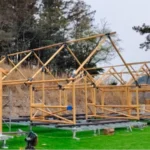
Behind the Scenes: Assembling our Premium Safari Tents
April 2, 2026
Beyond the Canton Fair: Explore the Future of Luxury Glamping at Our Local Showroom
April 8, 2026Coexisting with Nature: The Future of Sustainable Glamping
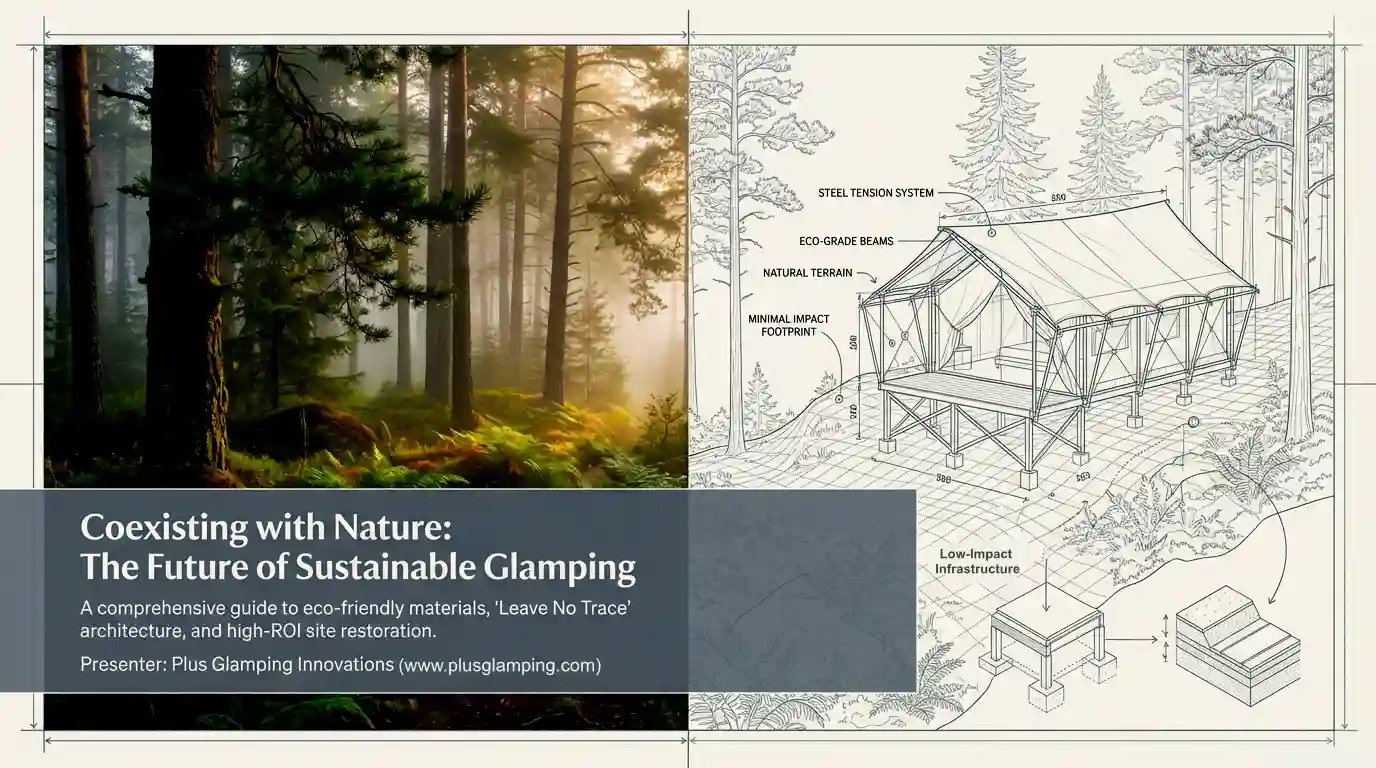
Modern Engineering Meets Deep Ecology
The future of hospitality belongs to designs that respect the earth.Our glamping architectureachieves a perfect balance between luxury and sustainability through a three-part lifecycle:
- Part 1: Eco-Friendly Materials – The Foundation of Coexisting with Nature
- Part 2: Zero Impact Operation & Tear-Down – Letting the Land "Breathe" (Leave No Trace)
- Part 3: High-value Recycling & Repurposing – A Win-Win for Ecology and ROI
Part 1: Eco-Friendly Materials – The Foundation of Coexisting with Nature
- Nature-Sourced Solid Wood Frames: If you are pursuing the ultimate organic aesthetic, preservative-treated solid wood is an excellent eco-friendly choice. As a low-carbon, renewable natural resource, solid wood frames allow structures like the Safari Tent and the artful Stretch Tent to blend seamlessly into forests and wilderness. At the end of their lifecycle, timber is much easier to naturally degrade or repurpose for other woodworking projects compared to traditional industrial building materials.
- Low-Impact Infrastructure (Zero Concrete Contact): Traditional buildings require excavating foundations and pouring concrete, whereas glamping products can utilize a hot-dip galvanized steel chassis. This adjustable platform system adapts perfectly to uneven mountainous or forest terrain, preserves underground air circulation, and completely eliminates the need to disrupt the original soil and plant root systems.
- Longevity is the Ultimate Sustainability: Products like the Tent House and the high-end Luxury Lodge Tent feature 1050 g/m² PVDF architectural membranes, which boast an exceptional self-cleaning "Lotus Effect" and a lifespan of over 15 years. Reducing replacement frequency is the greatest way to conserve resources.
More about glamping tents materials, please read: Glamping Tent Materials Guide: Specifications, Performance, and Solutions
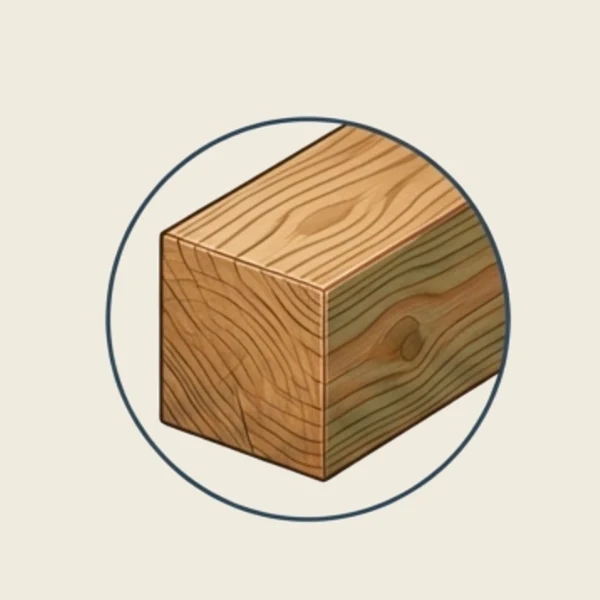
Nature-Sourced Solid Wood Frames
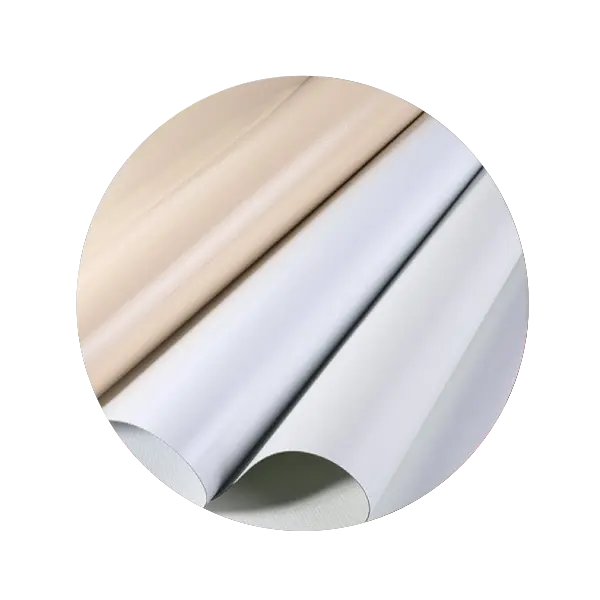
1050g PVDF Membrane
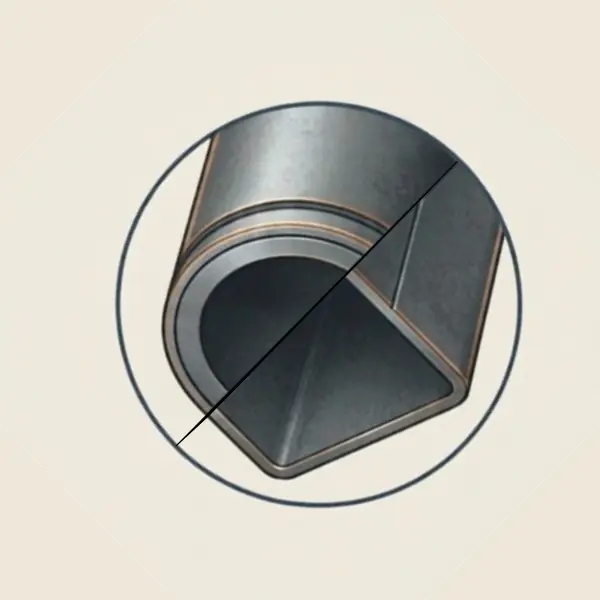
Hot-dip galvanized steel Frames & Connectors
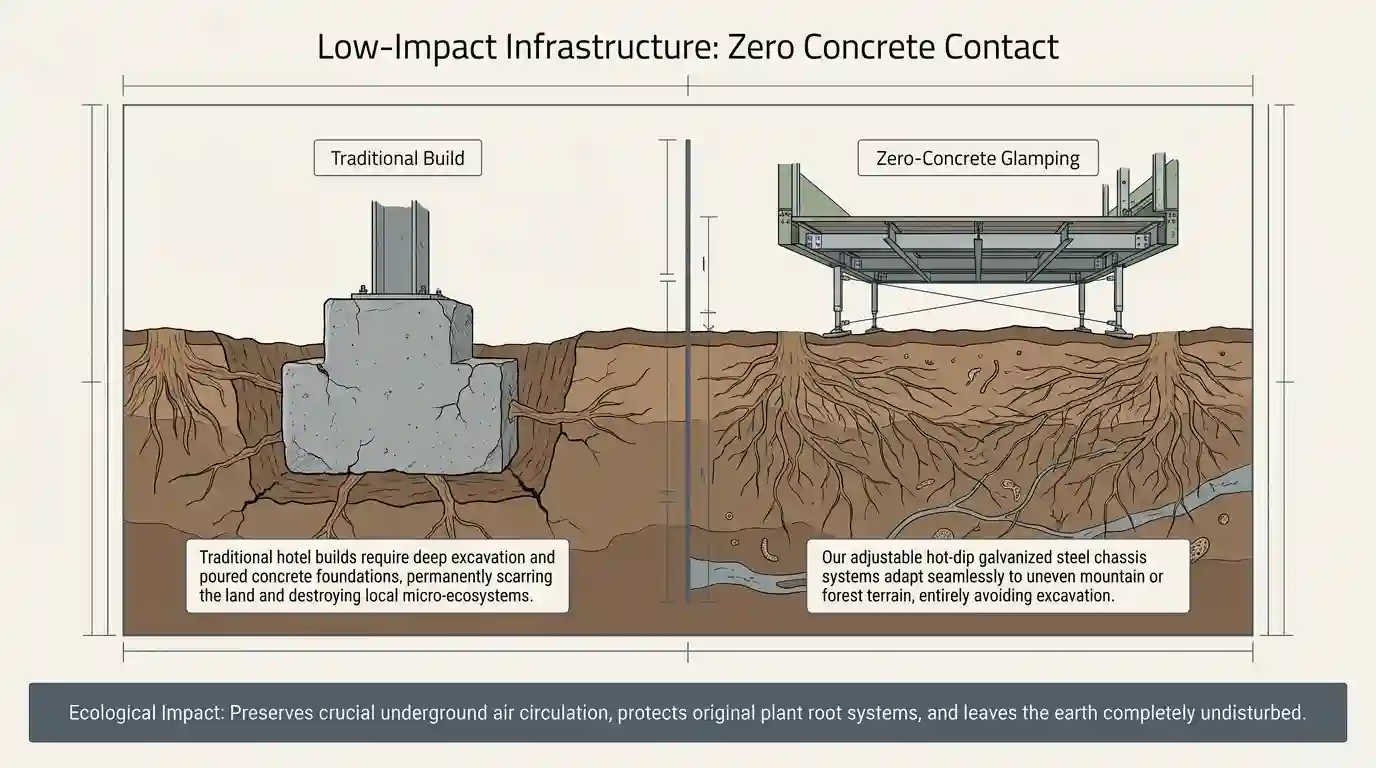
Low-lmpact Infrastructure:Zero Concrete Contact
Part 2: Zero Impact Operation & Tear-Down – Letting the Land "Breathe" (Leave No Trace)
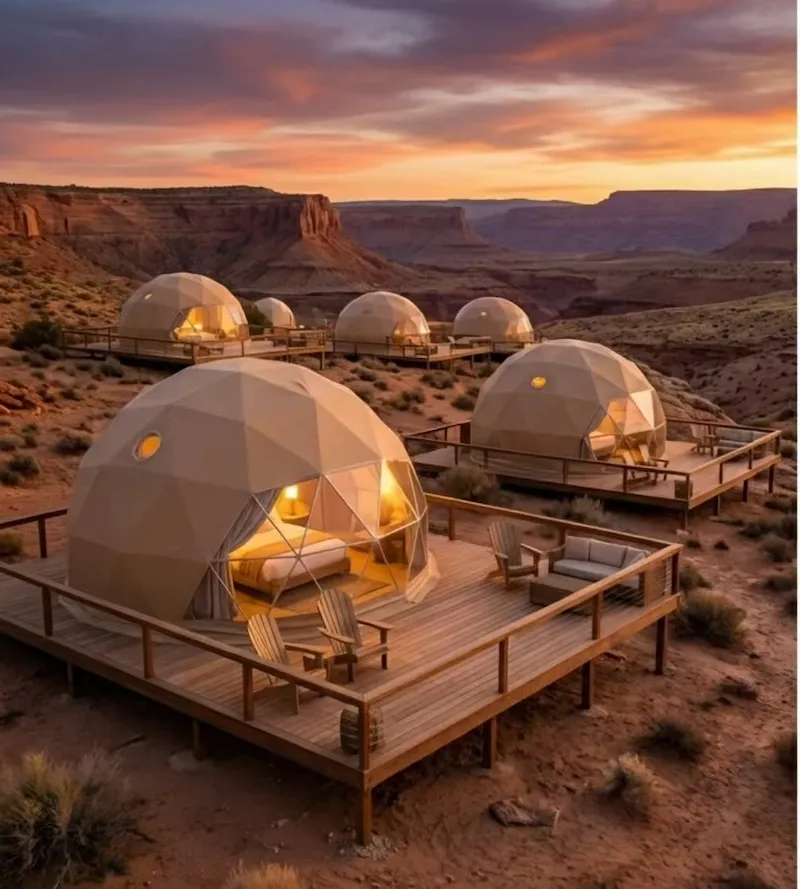
- The Magic of Modular Design: * Whether it's the snow- and wind-resistant Glamping Dome or the permanent-looking Prefab House, they all utilize high-strength modular framework systems. This means they snap together like building blocks during assembly without the need for heavy machinery. When it's time to relocate or redesign the campsite, they can be dismantled quickly and harmlessly.
- 100% Site Restoration: * When a glamping site faces seasonal closures or lease expirations, most of these structures can be completely removed. Because there is no permanent concrete foundation, the cleared land can immediately resume vegetation growth after a few rainfalls, truly fulfilling the outdoor "Leave No Trace" environmental ethic.
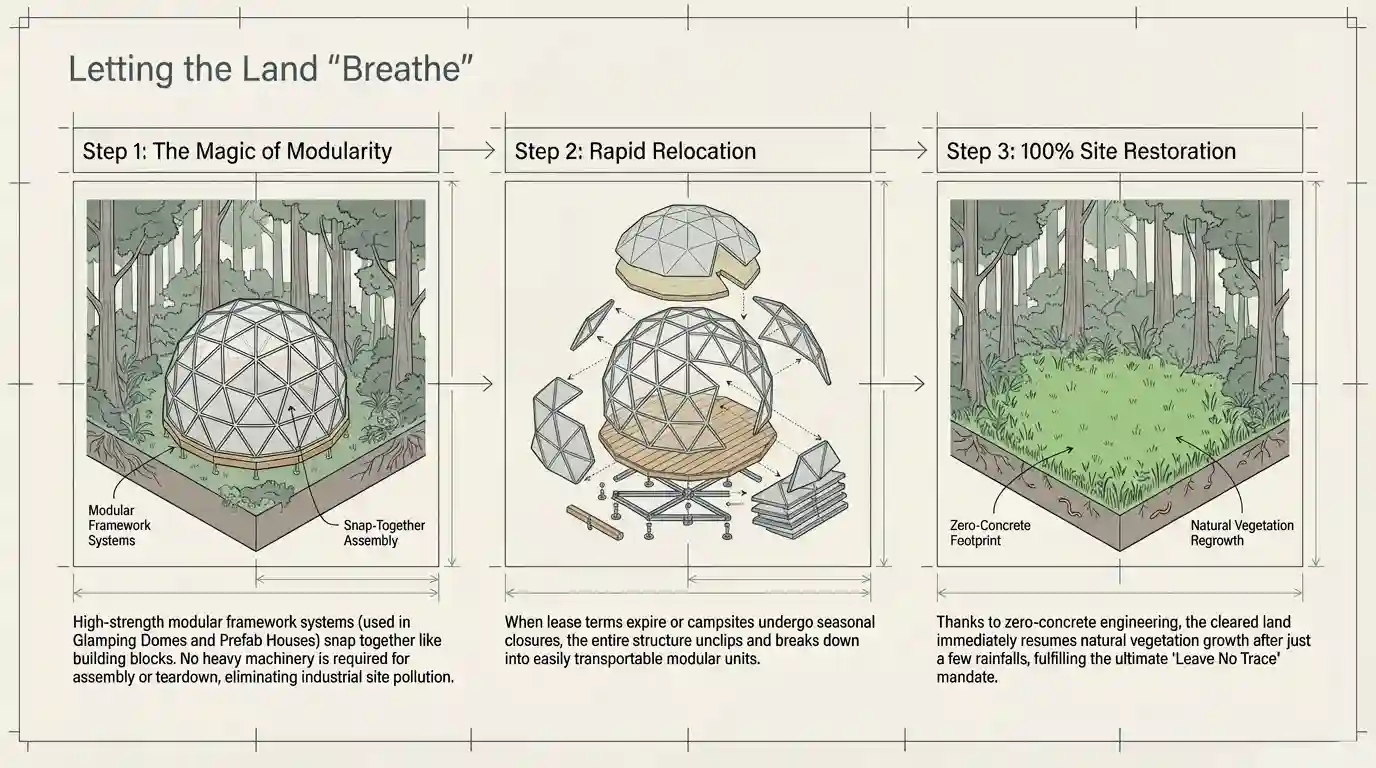
Zero Impact Operation & Tear-Down
Part 3: High-value Recycling & Repurposing – A Win-Win for Ecology and ROI
- High-Value "Metal Skeletons": * Aluminum alloy frames (commonly used in Prefab Houses and high-end Glamping Domes) are top-tier choices for glamping architecture. They are lightweight (reducing carbon emissions during transport), completely rust-proof, and mostimportantly, retain a very high scrap value after a 30-year lifespan, allowing them to be fully melted down and recycled.
- Hot-dip galvanized steel can similarly be transferred to other glamping sites for continued use or seamlessly enter the global steel recycling industry.
- Reusable Hard-Shell Modules: * Interior hard-shell wall panels (such as composite aluminum panels or double-glazed tempered glass) and eco-friendly flooring (like 100% waterproof SPC stone plastic composite) often maintain excellent physical properties even after dismantling. These materials can be directly repurposed for smaller building projects or kept as spare parts, drastically reducing construction waste.
Conclusion
- Summary: The future of glamping belongs to designs that perfectly blend modern engineering with ecology. From naturally renewable solid wood frames and breathable canvas to high-recyclability aluminum systems, every product line pays tribute to nature in its own way.
- Call to Action: As a glamping site owner or investor, choosing premium glamping structures isn't just about providing guests with a flawless vacation experience—it's about fulfilling a long-term commitment to the planet. Explore the full range of sustainable Glamping Products and launch your high-ROI green glamping project today.