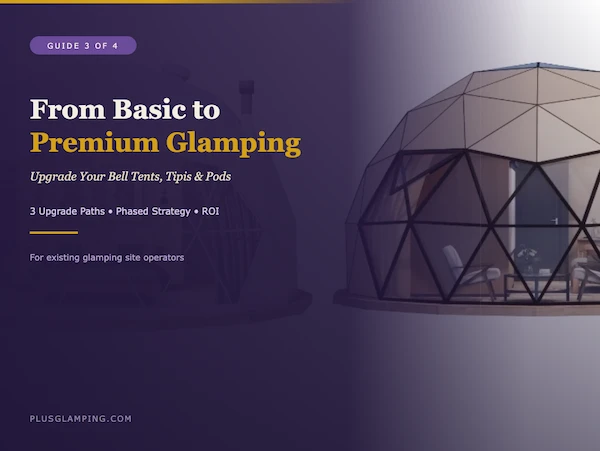
From Basic to Premium Glamping: Upgrade Your Bell Tents, Tipis & Pods
July 21, 2026
A New Tent House Safari Retreat Takes Shape in Africa
August 28, 2026From RV & Caravan Parks to Glamping: The Lowest-Cost Conversion Nobody Talks About
Here's the counterintuitive truth: converting an RV park to glamping is often cheaper than building from a raw campsite. Why? Because the most expensive part isn't the tent — it's the infrastructure underneath it. And RV sites already have all of it.
Start Reading →RV, Caravan, or Travel Trailer? Different names, similar opportunity. In North America, these properties are commonly described as RV parks, while in the UK, Europe, Australia and other markets, similar sites are often called caravan parks or travel trailer parks. The terminology varies by region, but the conversion opportunity is essentially the same: existing camping infrastructure can be repurposed for higher-value glamping accommodation.
RV Park, Caravan Park or Travel Trailer Park: What's the Difference?
| Term | Common Markets | What It Usually Means |
|---|---|---|
| RV Park | USA / North America | Campground designed primarily for recreational vehicles |
| Caravan Park | UK / Europe / Australia | Campground primarily serving caravans and other camping units |
| Travel Trailer Park | USA / North America | Park serving towable travel trailers |
| RV Park | Global / broader usage | May include both motorized and towable RVs |
For glamping conversion purposes, the distinction is less important than the infrastructure already available on the site.
Your RV or Caravan Park Already Has What Glamping Sites Pay Fortunes For
When most people think about building a glamping site, they picture buying raw land and starting from zero. But if you already own or operate an RV park, caravan park, or travel trailer campground, you're sitting on the most expensive part of any glamping build — already done and paid for.
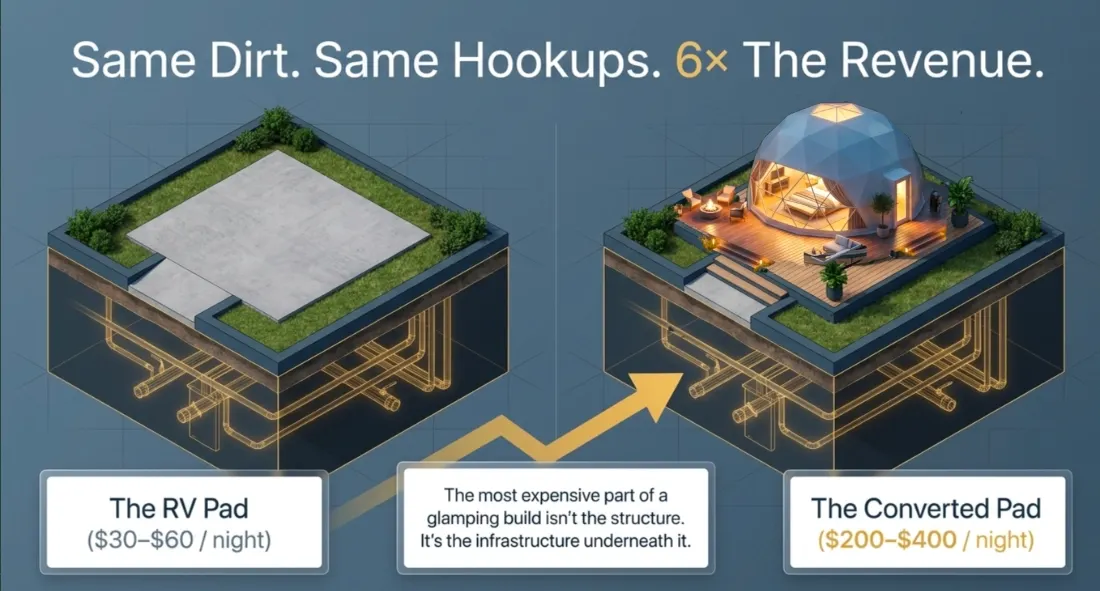
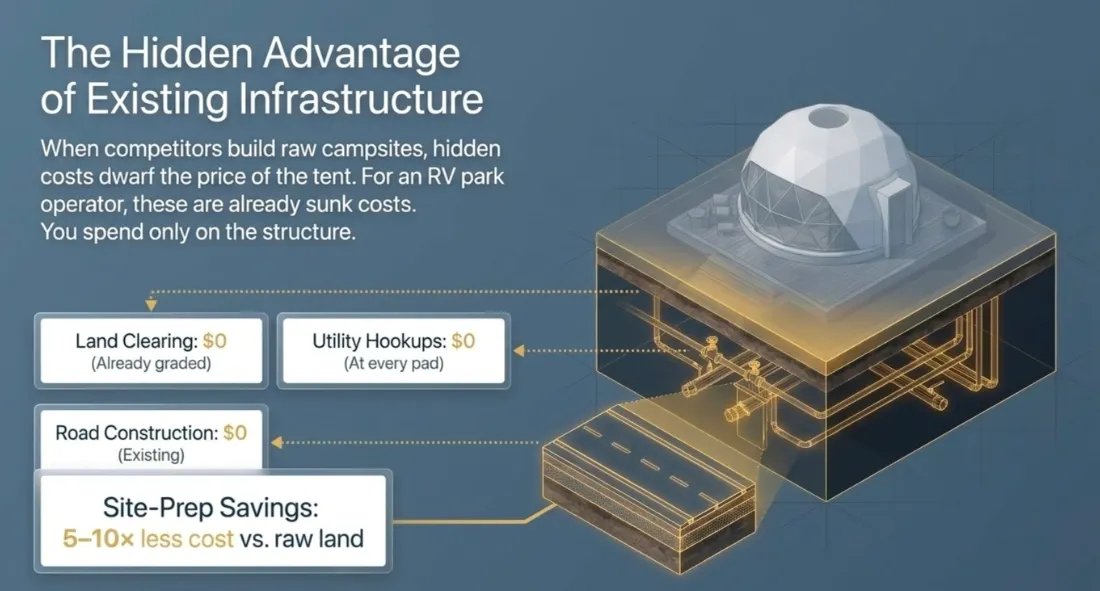
Every RV pad already comes with full hookups — water, electricity, and sewer — plus a graded, level foundation, road access, and commercial camping permits. When you convert a raw field to glamping, these "hidden costs" can dwarf the price of the tent itself. For an RV park operator, they're already sunk costs.
This is why RV-park-to-glamping conversion is one of the most profitable and rapidly growing pivots in the US and European outdoor hospitality industry right now. You're not building infrastructure — you're swapping a $30/night RV pad for a $250/night glamping unit on the exact same spot.
Side-by-Side: Raw Campsite vs. RV Site Conversion Costs
Here's the cost breakdown that proves the point. Same glamping tent, dramatically different total investment:
| Cost Item (per unit) | Raw Campsite → Glamping | RV Site → Glamping |
|---|---|---|
| Land clearing & grading | $5,000 – $20,000 | $0 — already done |
| Water / electric / sewer hookup | $3,000 – $15,000 | $0 — at every pad |
| Road construction | $10,000 – $50,000 | $0 — existing |
| Permitting & approvals | $2,000 – $10,000 + months | Minimal — commercial use established |
| The glamping structure itself | $2,000 – $9,000 | $2,000 – $9,000 (same) |
| TOTAL per unit | $14,000 – $112,000 | $2,000 – $11,000 |
The takeaway
An RV park operator only spends on the tent itself. A raw-land developer spends 5–10× more on site preparation than on the actual glamping structure. For the same $9,000 Safari Tent, the RV park operator's all-in cost is ~$11,000 while the raw-land developer's is ~$50,000+. Same product, same nightly rate, radically different ROI.
5 Reasons RV-to-Glamping Is the Smartest Pivot in Outdoor Hospitality
Best Glamping Products for RV & Caravan Park Conversion
Since your infrastructure is handled, product selection is simpler — focus on what fits your pad size, target market, and desired nightly rate. Here are the top three picks for RV park conversions:
For a full comparison of all glamping tent types — including domes, safari tents, lodge tents, and more — with detailed selection criteria, see our How to Choose the Right Glamping Tent guide.
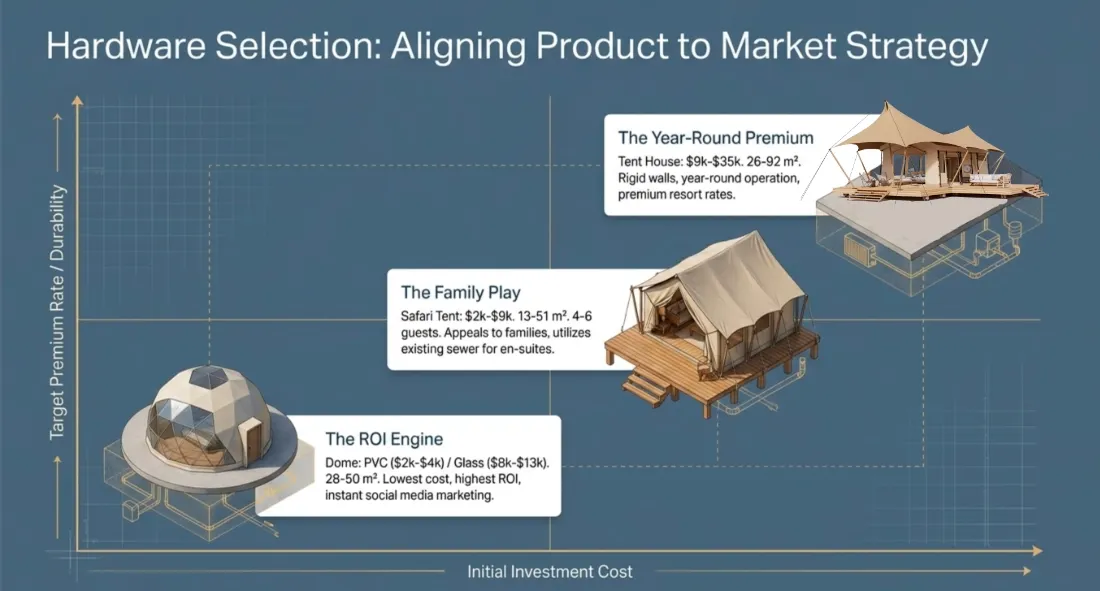
① Glamping Dome — The #1 Pick
Lowest cost, highest "wow factor," fastest payback
The Glamping Dome is the ideal RV park conversion product. At $2,000–$4,000 for the PVC series, it's the lowest-investment option with the highest visual impact. Domes fit on a standard RV pad footprint, install in 1–2 days, and immediately command $200–$400/night. The 360° transparent design is the most-shared glamping structure on social media — instant marketing for your park.
Best for: RV park operators wanting maximum ROI with minimal risk. Start with 2–3 domes on underutilized pads.
Explore Glamping Domes →② Safari Tent — The Family Market Play
Classic canvas luxury for families and groups
If your RV park serves family traffic, Safari Tents are the natural fit. They offer more floor space than domes (up to 51 m²), accommodate 4–6 guests, and can include en-suite bathrooms using your existing sewer hookups. The classic canvas-on-platform aesthetic appeals to families who want the "camping feel" with real comfort.
Best for: Parks targeting the family segment, or those wanting bathroom-equipped units from day one.
Explore Safari Tents →③ Tent House — The Premium Upgrade
Rigid walls + soft roof for year-round operation
For parks ready to command $300–$500/night, the Tent House offers rigid walls (wood or composite) with a soft roof — delivering the durability of a cabin with the flexibility of a tent. Insulated for year-round operation, spacious enough for families, and visually distinctive. This is where RV parks evolve into premium glamping resorts.
Best for: Parks ready to move upmarket and operate year-round at premium rates.
Explore Tent Houses →The Hybrid Strategy: Keep Your RV Guests, Add Glamping Revenue
The beauty of RV park conversion is that you don't have to choose. The smartest operators run hybrid models — keeping their loyal RV customer base while adding glamping units for a completely new audience. Here's how to structure it:
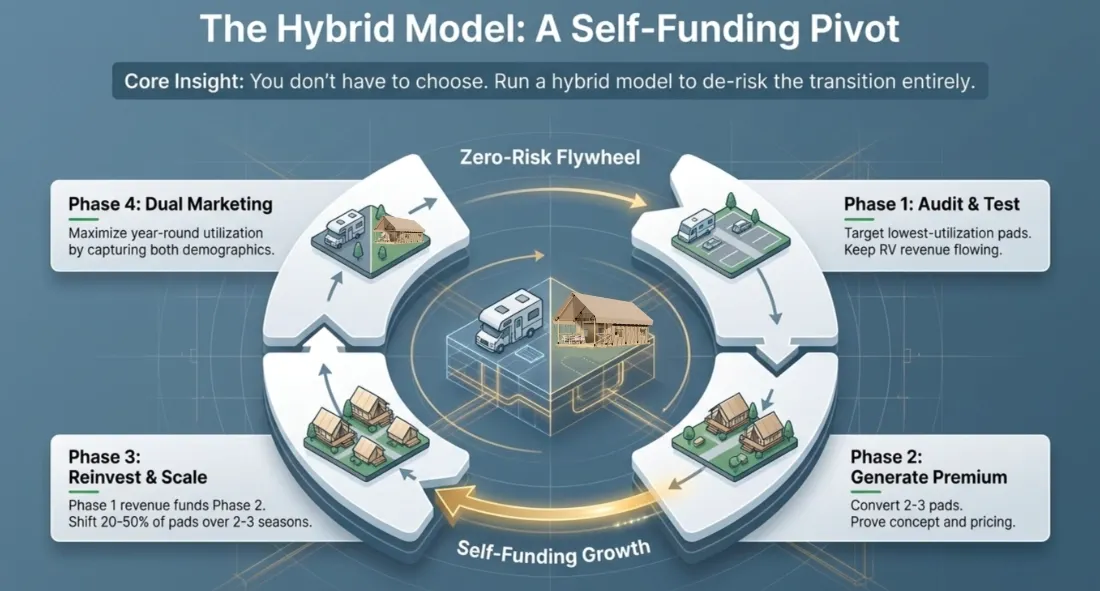
Step 1: Audit Your Pad Utilization
Not all RV pads are equal. Some are booked 90% of the time; others sit empty most of the season. Identify your lowest-utilization pads — the ones generating the least revenue. These are your conversion candidates. You're not losing valuable RV capacity — you're upgrading wasted space.
Step 2: Convert 2–3 Pads in Phase 1
Start small. Convert 2–3 underutilized pads to glamping domes or safari tents. This gives you proof of concept, generates immediate premium revenue, and lets you test pricing and demand — all while your core RV business continues uninterrupted.
Step 3: Scale Based on Demand
Once your glamping units are booked solid (typically within the first season), convert more pads. The revenue from Phase 1 funds Phase 2. Over 2–3 seasons, you can shift 20–50% of your pads to glamping while maintaining enough RV capacity to serve your existing clientele.
Step 4: Market to Two Audiences
Your RV and caravan guests and your glamping guests are completely different demographics — they don't compete. RV guests bring their own accommodation; glamping guests rent yours. By serving both, you maximize pad utilization year-round: RV traffic in peak summer, glamping bookings extending into shoulder seasons.
Why the RV-to-Glamping Pivot Is Accelerating Now
The RV-to-glamping conversion isn't just a good idea — it's a structural shift in the outdoor hospitality industry, driven by several converging trends:
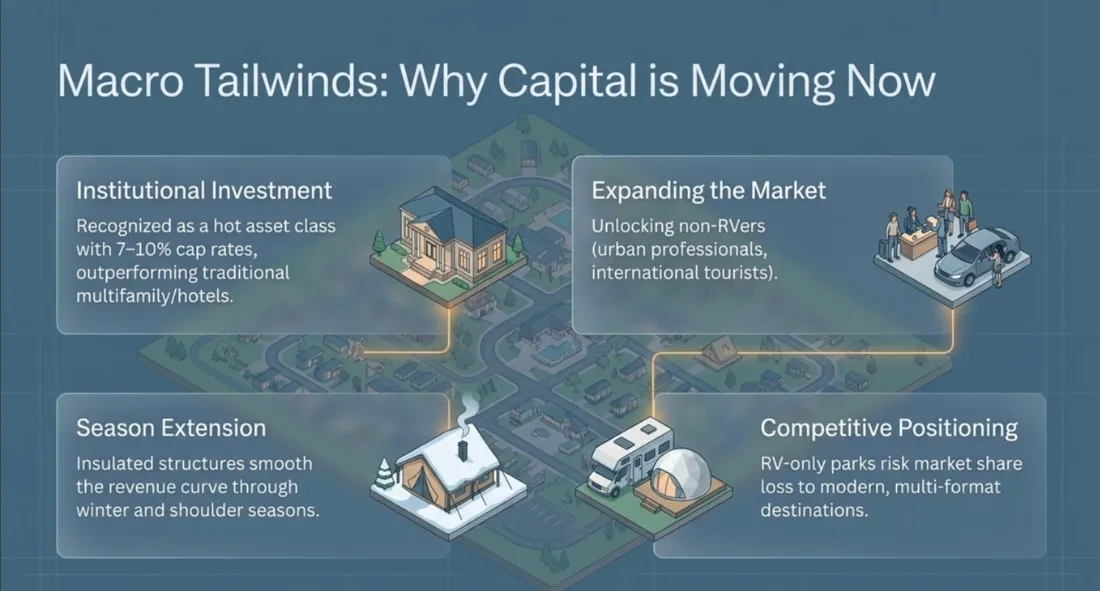
Institutional Investment
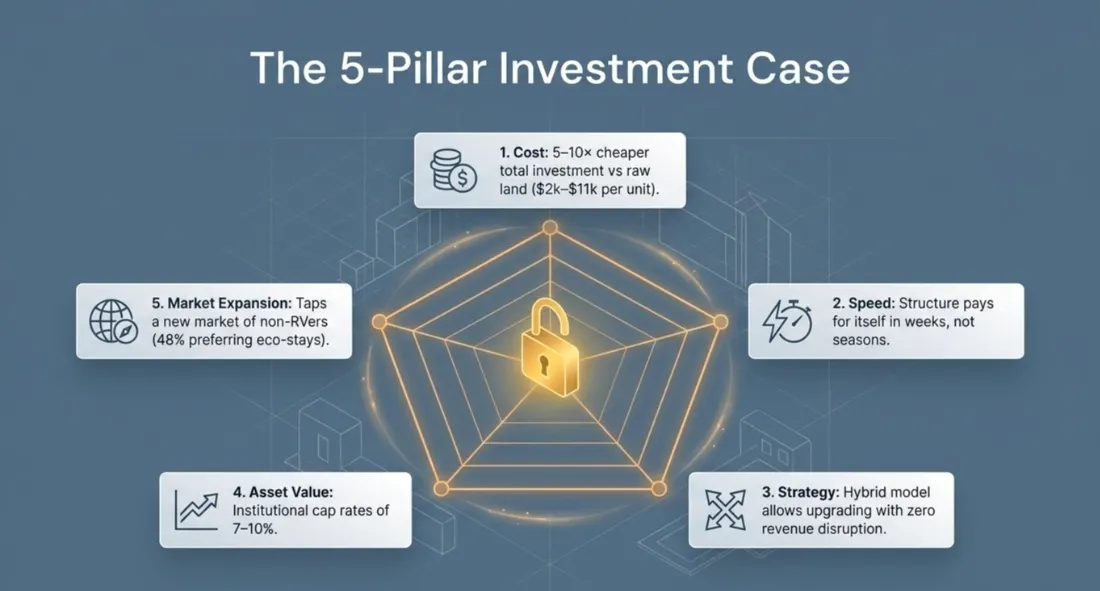
RV parks and glamping resorts are now recognized as a hot new asset class. Institutional investors are acquiring and upgrading campgrounds, with cap rates of 7–10% — higher than apartments or hotels. Adding glamping makes your property attractive to this capital.
Expanding the Market
Glamping opens your park to "non-RVers" — young urban professionals, international tourists, and families who don't own camping gear. You're not competing for the same RV guests; you're capturing travelers who'd otherwise book a hotel or Airbnb.
Season Extension
RV travel is highly seasonal. Insulated glamping structures with heating can operate in shoulder seasons and winter — smoothing out your revenue curve and increasing annual occupancy beyond the RV-only baseline.
Competitive Positioning
As more parks add glamping, RV-only parks risk losing market share. Adding glamping units positions your park as a modern, multi-format destination — attracting both traditional RV guests and the growing glamping market simultaneously.
The window for first-mover advantage is open now. Operators who convert underutilized RV pads to glamping before their competitors do will capture the premium-rate market and build the online reviews and social media presence that make latecomers harder to displace.
Your RV Pads Are Worth More Than You Think
You already have the infrastructure. The market is ready. The ROI math works in weeks, not years. Convert your lowest-utilization pads to glamping this season and watch your per-pad revenue multiply 5–8×.
Starting from scratch? Read Guide 1: Campground → Glamping →
Already running bell tents or pods? Read Guide 2: Basic → Premium Glamping →
All prices are factory estimates (EXW, China). Exclude shipping, installation, and accessories. Contact Plus Glamping for free quotes and detailed proposals. · Guide 3 of 3 (RV Park → Glamping), part of the upgrade guide series.